Carmela Basaguren
Las madres noCarmela Basaguren is Alice Espanet’s defense lawyer in the trial over the deaths of Alice’s twins. Known as a feminist fighter and already close to retirement, she enters the case immediately after the children’s cremation and makes two objectives central to her work: securing Alice’s release from custody and persuading the court that mental illness had deprived her of criminal responsibility. Her cross-examinations, courtroom staging, and final appeal present the trial as a dispute not only about guilt, but about how the law should judge a mother whose conduct is linked to severe psychological disturbance.
Identity and Entry into the Case
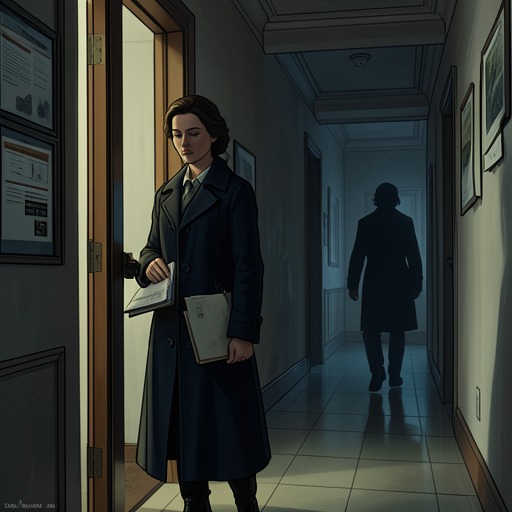
Ritxi, Alice’s husband, had withdrawn into isolation after the twins’ deaths. The day after the cremation, he contacted his trusted lawyer and asked him to find the city’s best criminal defense attorney. Basaguren’s name emerged: she was described as near retirement age and as having a reputation as a committed feminist. She accepted the case the same day she was approached and began work at once.
The immediate priority was to get Alice out of prison while she awaited trial. Basaguren filed a forceful appeal arguing that pretrial detention was unnecessary: the defense emphasized that Alice posed no risk of reoffending, had established roots, and was not a flight risk. The prosecution opposed release, stressing the gravity of the accusations—two murders, aggravated by kinship—and the potential sentence of forty years. The judge nevertheless granted the defense request. Alice was released after surrendering her passport, agreeing to report to the courts every fifteen days, and paying bail of fifty thousand euros.
From this first application, Basaguren also made clear that the defense would seek acquittal on the grounds of mental incapacity. She invoked Article 20.1 of the Spanish Criminal Code, which exempts a person from criminal responsibility when a psychological anomaly or disorder prevents them from understanding the unlawfulness of an act or acting in accordance with that understanding. The appeal did more than secure Alice’s temporary freedom: it established the legal framework around which Basaguren would organize the eventual trial.
Building the Defense in Court
At trial, Basaguren’s work included managing the impression Alice made in the courtroom. Alice’s appearance was carefully considered with her lawyer. She wore a sober black skirt and white blouse with a large bow, without heels; her hair was arranged so that it would not make her face appear too harsh. Her hands stayed on the table, in front of a blank sheet and a pen, which she did not touch. Basaguren whispered to her, and Alice nodded while continuing to look ahead. The Narrator, watching from the sixth row, registers the scene as deliberate preparation as well as a source of anxiety.
Basaguren tested the police account of Alice’s behavior after the deaths. The officers recalled that Alice repeatedly said that the children were now all right, a phrase the prosecution treated as evidence that she understood what had happened and had completed a task. Basaguren asked whether such calmness was usual in someone who had just committed homicide. One officer said it was not: suspects were generally nervous, and scenes were often chaotic. Another offered shock as a possible explanation. The exchange exposed a tension in the evidence: Alice’s composure appeared striking, but the officers could not establish that it had only one meaning.
The psychiatric testimony made that uncertainty explicit. A Belgian psychiatrist connected Alice’s behavior and her own account to postpartum psychosis, but acknowledged that no official diagnosis had been made at the time. Basaguren drew out the basis of the diagnosis: it rested on Alice’s conduct and what Alice herself reported. The psychiatrist accepted that these were the grounds available to him. The exchange did not erase the uncertainty; it showed the jury how much the diagnosis depended on interpreting behavior and testimony after the event.
Two other psychiatrists, who had examined Alice at the investigating judge’s request, disputed the Belgian doctor’s view. They said they had found no sign of postpartum psychosis or even depression, and emphasized that postpartum psychosis usually appeared in the weeks immediately after birth, whereas the twins were ten months old. They also described other infanticide cases, prompting Basaguren to object that the examples were irrelevant and ask them to stay with her client’s case. Their subsequent presentation included depression inventories and a list of traits attributed to Alice, among them narcissism, histrionic tendencies, low empathy, and a propensity to idealize some people while disparaging others. The Narrator describes the jury as losing interest during this impersonal presentation, though the account does not suggest that Basaguren could settle the underlying medical disagreement.
Witnesses and the Meaning of Care
Mélanie, the au pair, was the only witness to testify behind a screen. She refused an interpreter but could not look Alice in the face. The arrangement gave the prosecution a visual image of danger and the need for protection; at the same time, Mélanie’s account suggested that Alice had not been mentally well. Her testimony therefore fed both sides of the central dispute: what Alice had done, and how far illness could explain or mitigate it.
Mélanie had worked in Alice and Ritxi’s home from the time the babies were one month old until the family’s life changed irrevocably. She described a volatile pattern. At times Alice hovered over her, directing how she held the babies, changed their diapers, or applied cream. At other times Alice announced that she was going to paint in her studio and left Mélanie to manage the children alone. Alice’s moods could turn critical or despondent, and her worries about the babies shifted between fears that they were not gaining enough weight, that they were too fat, that they slept too little, or that their naps were becoming too long. These particulars gave the jury a picture of anxious, unstable care rather than a simple account of either devoted motherhood or indifference.
Basaguren asked Mélanie whether Alice loved the children. The question was presented with a candor that the Narrator regarded as possibly feigned. Mélanie answered that Alice had worried greatly about them, then faltered over whether that amounted to love. She ended her testimony in tears, moving two jurors to wipe their eyes. Basaguren’s question brought the trial’s competing standards into focus: observable care, the inner feeling called love, and the limits of what a witness can know about another person’s attachment.
Closing Argument and Outcome
In her closing argument, the prosecutor described Alice’s conduct as monstrous and her apparent indifference as an additional offense. Basaguren responded by renewing the request for acquittal under Article 20.1. She did not deny the horror of what had happened or suggest that the twins deserved anything less than protection and love. Instead, she asked the jurors to consider whether lifelong imprisonment would serve justice when Alice was broken, confused, and affected by depression, psychosis, hallucinations, paranoia, and unpredictable violent reactions.
Basaguren’s appeal also redirected attention from an abstract sentence to the life that would follow the trial. Whatever the jury decided, she argued, Alice would carry the consequences and the memory of the children: photographs, clothes, cribs, and the smells that could not be forgotten. Punishment would not remove that burden. The argument asked the jury to hold two judgments together—that the act was atrocious and that the person who committed it might not have been capable of controlling her actions.
The jury found Alice guilty but accepted the defense of insanity. The judge replaced imprisonment with psychiatric treatment on an outpatient basis, so Alice would not be admitted to a psychiatric hospital. In a later interview with Jakes Ruiz de Infante, published on October 27, Basaguren described the result as an important opportunity to prompt debate about mental illness and criminal punishment. She criticized a system in which judges and psychiatrists seemed to pass responsibility back and forth, leaving cases to improvisation and temporary solutions. She also supported outpatient treatment in Alice’s circumstances, citing the family’s financial security, Ritxi’s commitment, and institutional oversight. The interviewer then asked whether Alice’s favorable sentence depended on her social status; the available exchange records the question but not Basaguren’s answer.
Narrative Role and Significance
Basaguren is shown through the Narrator’s account of the trial, not through an independent biography. Her courtroom choices are therefore legible as both legal strategy and public performance: the carefully managed image of Alice, the precise challenges to witnesses, and the closing appeal all compete with the prosecution’s account of a crime demanding punishment. The book does not make the medical evidence conclusive. Instead, it lets the disagreement over diagnosis, timing, demeanor, and responsibility remain visible.
Her defense also links Alice’s individual case to broader questions about how criminal law recognizes mental illness and maternal circumstances. Basaguren’s use of Article 20.1 places the question of responsibility within a legal test, while her closing argument asks what punishment can accomplish when illness has shaped the accused’s actions and the aftermath will remain with her. The resulting outpatient sentence is both a concrete consequence of her advocacy and a point of controversy: the interview raises the possibility that resources and family support helped make that alternative practicable. Basaguren’s significance lies in holding these questions before the jury and the reader without making the conflict between accountability, illness, and unequal circumstances disappear.